Onion & Leek Planting Guide
Onions are more than just a kitchen staple—they’re the ultimate storage crop and the backbone of countless recipes. If you’re a vegetable gardener, learning how to grow your own onions is a game-changer. From planting to harvesting and curing, our Onion & Leek Planting Guide has everything you need to cultivate flavorful, long-lasting bulbs right in your garden. Ready to dig in? Let’s get started!
🧅 Different Onion Options
Keene Garlic is happy to offer both Certified Organic Onion/Shallot/Leek Plants as well as Non-GMO Onion Sets for spring planting.
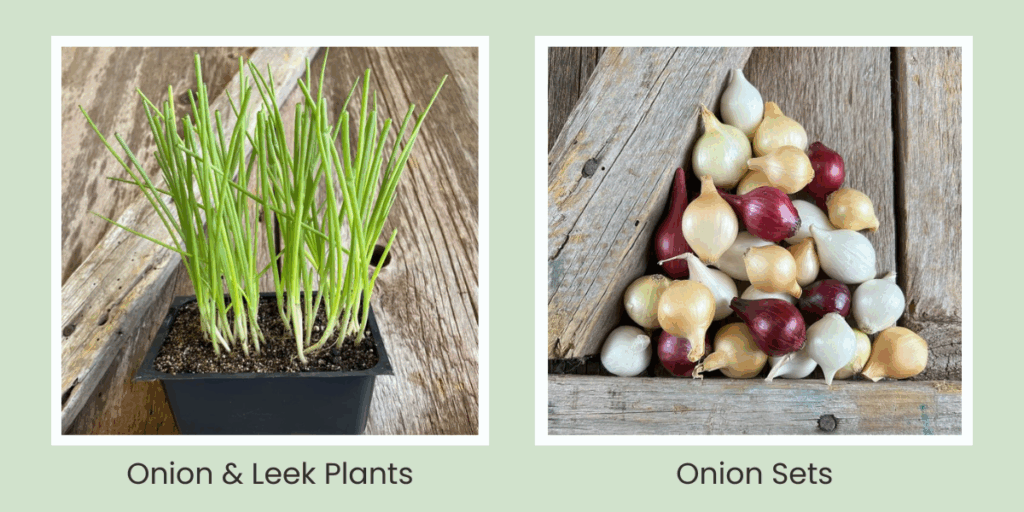
🪴Onion & Leek Plant Details
Our Organic Onion and Leek Plants are greenhouse-grown on small family farms in Wisconsin.
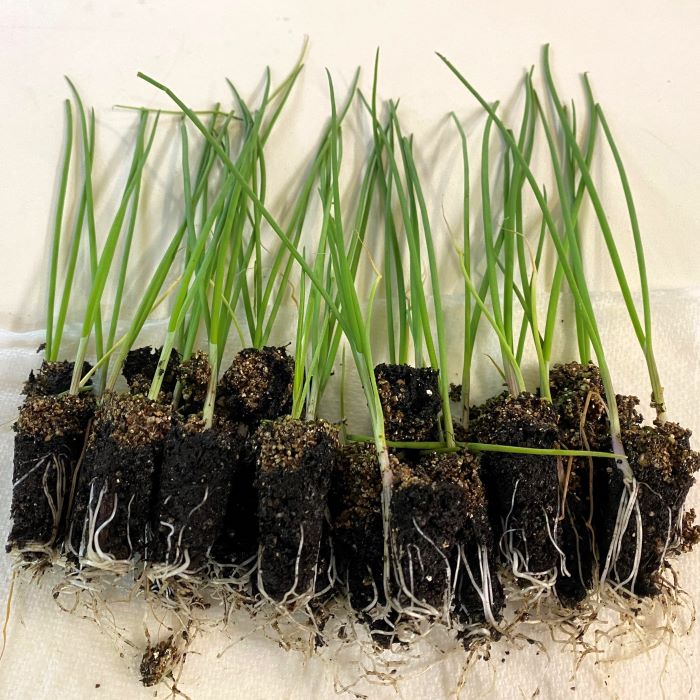
These live seedlings arrive in soil-filled containers, partially hardened off for success.
⚠️ Special Care: These plants are a favorite among gardeners and farmers for their abundant, high-quality harvests. They’re more delicate than sets and need a little extra attention when they first arrive. Because shipping can be stressful, monitor tracking, unpack immediately, give a light watering, and begin hardening them off slowly for the best planting success. Although they arrive pre-hardened, easing them back into outdoor conditions with a gentle, gradual re-hardening process ensures strong, healthy growth. If you have any issues, contact us right away—we’re here to help. With proper early care, you’ll be rewarded with exceptional onions and leeks.
🧅 Non-GMO Onion Sets
These non-GMO, non-treated, pearl-sized bulbs are planted whole and grow into large, flavorful summer onions. Available in Yellow, Red, White, or Sweet varieties, as well as our Onion Set Sampler—perfect for gardeners who love options!
🌟 Pro Tip: Upon arrival, unpack your starter onion sets and store them in a cool, dry place until planting time.
☑️Keys to Successful Onion Growing – Choose the Right Onions for You
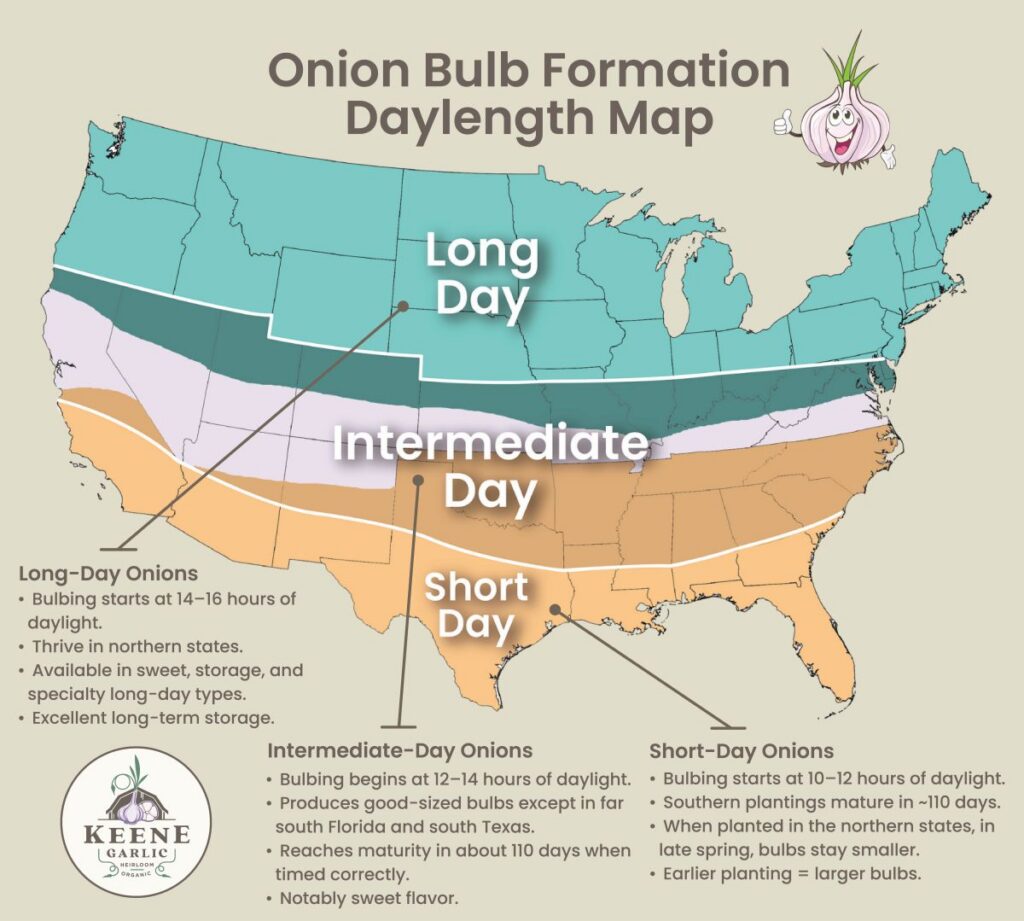
Did you know? Onions rely on day length—not temperature—to know when to form bulbs. That is why it is important to choose onions that will work for your region.
- Long‑day onions need 14–16 hours of daylight, so they thrive in northern areas.
- Intermediate-day onions need at least 12-14 hours of daylight; these do well in northern and middle regions.
- Short‑day onions need 10–12 hours of daylight, making them best suited for southern regions. Because of our location, we don’t offer short‑day varieties at this time.
☀️ Basic Onion & Leek Growing Info
- Sun Requirement & Timing: Onions require full sun – the more the better! Therefore, avoid planting next to crops that might shade your onions. It is typical to plant onions as early as 4 to 6 weeks before the last estimated spring frost.
- Soil Preparation: Alliums need full sun & loose, nutrient rich soil. Proper drainage is also key to growing great onions. Adding compost or a well-balanced organic fertilizer to the soil prior to planting is recommended, especially if your soil fertility is low. Our Keene Garlic Fertilizer is great for all alliums! If you have heavy soil, it is recommended to plant them in raised beds or raised bed rows at least 4″ high to promote sufficient drainage.
🌱 How to Plant Onions for the Best Results
Plant onions close to the soil surface, making sure the roots are fully covered. ✅ It’s best to plant into damp soil and water shortly after planting for strong growth.
There are two great methods for planting onions:
🔹 Option #1 (Recommended):
Plant single onion plants 4″ apart in rows spaced 10–12″ apart. This method gives each onion plenty of room to grow.
🔹 Option #2:
Plant groups of 3 onion plants 10″ apart in rows spaced 10–12″ apart. This technique allows all three onions to spread out and reach full size. This method also allows for easier weeding between plants when they are small.
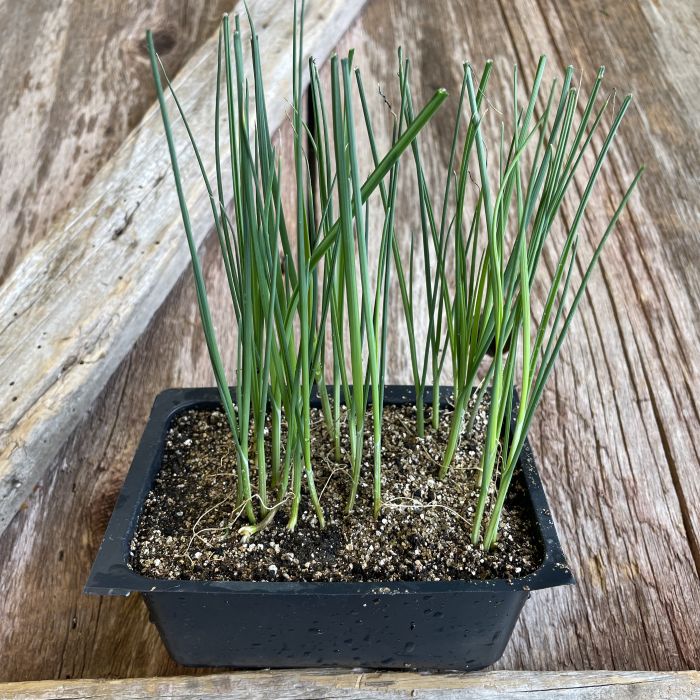
How to Plant Leeks for Long, White Stalks
- Plant leeks individually in a 6-inch deep trench, making sure the roots are fully covered at planting time. ✅
- 🌟 Pro Tip: As leeks grow, gently add more soil every week or two. This simple step helps promote those beautiful, long, white stalks that every gardener loves!
💧 Watering & Weeding
Alliums (onions, leeks, and shallots) have shallow root systems, so consistent moisture is key. Aim for about 1 inch of water per week, especially during bulbing time, for the best growth.
🌟 Pro Tip: Alliums don’t compete well with weeds, so keep weed pressure down for optimum growth. Regular weeding or mulching will help your plants thrive!
🌟 Fertilizing Tips for Healthy Onions & Leeks
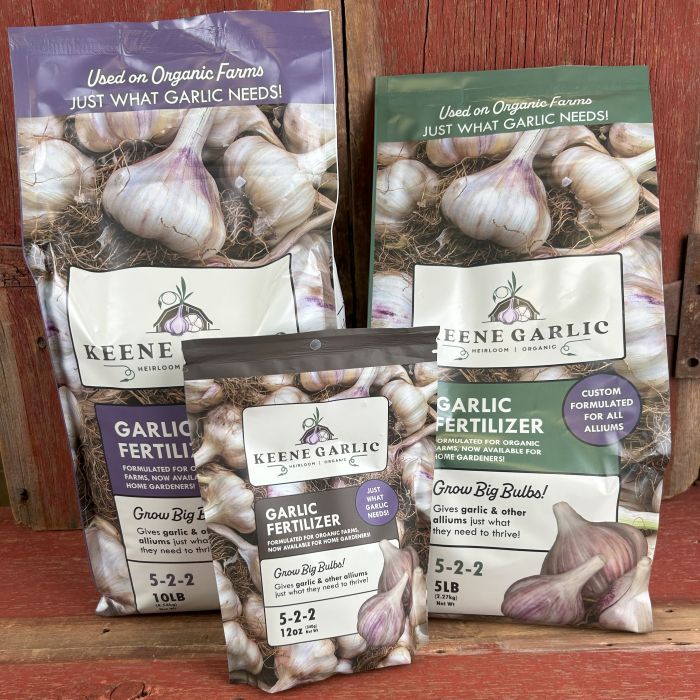
For strong, vibrant growth, add a specialty fertilizer—like Keene Garlic’s Garlic Fertilizer (made for all alliums!)—or an all-purpose fertilizer to the soil at planting time. ✅
💡 Pro Tip: Reapply fertilizer every 10–14 days until bulbing begins for the best results. This extra boost ensures your onions, leeks, and shallots grow big and flavorful!
🌱 Pest & Disease Control for Healthy Onions
Keeping your onions healthy starts with good airflow and crop rotation—both help reduce the risk of foliar diseases. ✅ Maintain proper spacing and keep weeds under control to prevent excess moisture, which can lead to problems.
🔍 Common Onion Pest: Thrips
Thrips are the most common pest for onions. Damage from these tiny insects appears as gray or silver streaks on the leaves. They can be controlled organically with Neem oil, safer soap & Pyrethrin.
🌾 Harvesting Onions and Leeks
- Harvest when at least half of the tops have naturally fallen over- this signals they’re ready.
- Use a garden fork to gently loosen the soil and lift the bulbs, taking care not to bruise them.
- Brush off excess dirt and let bulbs dry in the sun while you finish harvesting, or for up to one day if weather permits. Then move them to a dry, well-ventilated area to cure. (see curing tips below)
⭐Leek Tip: Leeks take longer to mature (120–150 days) and don’t fall over like onions. Harvest when the stems are firm and have reached a good size.
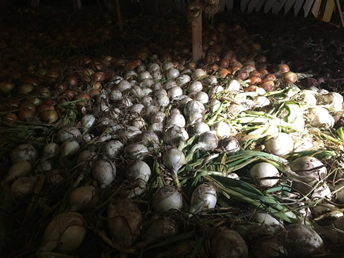
✅Curing Onions
Lay bulbs out in a warm, dry, well-ventilated space out of direct rain and strong sunlight. Leave the tops attached and allow them to dry for 2–3 weeks, or until the outer skins are papery and the necks are fully dry. Good airflow is essential to prevent rot.
🌟 Important: Onions must be thoroughly dried for successful long-term storage.
🧺 Storing Your Onions & Leeks for Freshness
🧅 How to Store Onions:
Your onions are fully cured and ready for storage when the necks are no longer green and completely closed.
✅ Trim off the dried leaves and store them in a netted bag or crate with good airflow to keep them fresh.
🌟 Note: Well-cured and properly handled onions can last 4–7 months in storage. Sweeter onion varieties have a shorter storage life, so enjoy those first!
💡 Pro Tip: Check your onions periodically for any that are starting to soften—use those sooner rather than later to prevent waste.
🌿 How to Store Leeks:
Store leeks in a plastic bag in the crisper drawer of your refrigerator for maximum freshness.
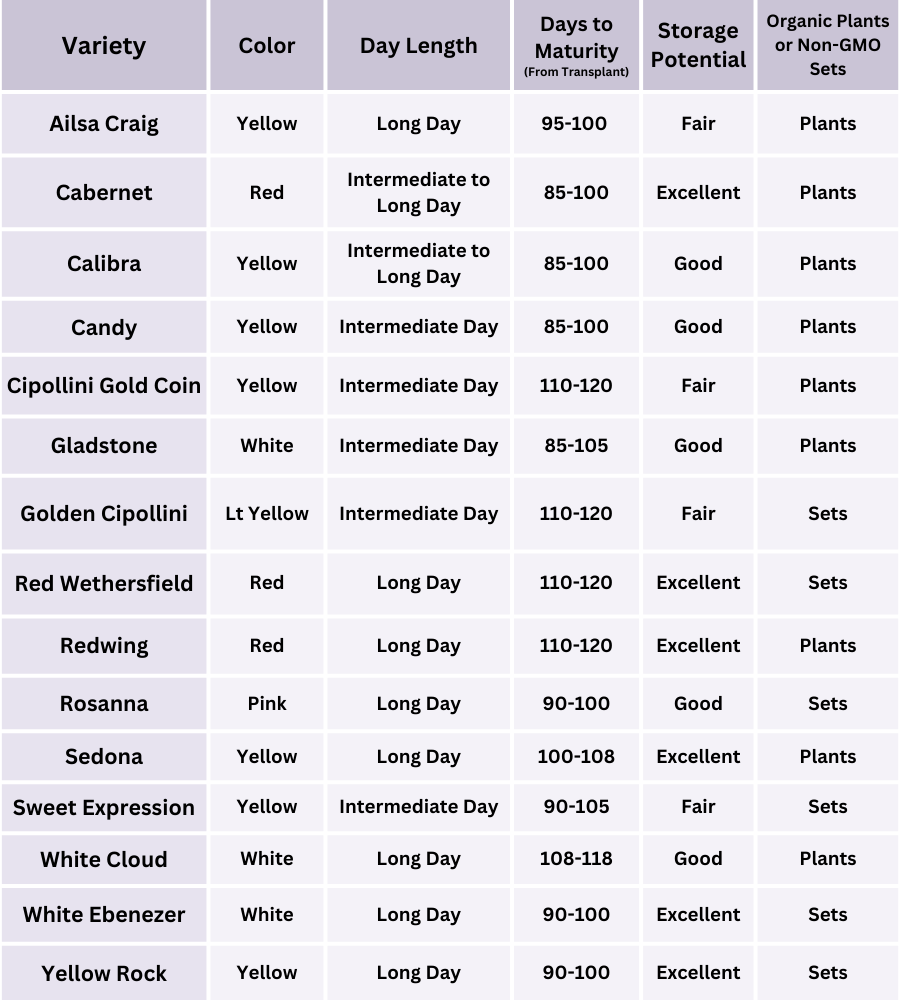
Our Onion Varieties at a Glance
I received my order of onions, leeks and shallots and just wanted to say a big thank you. They are beautiful! You take great care in the way they are packaged. Will be a customer for a long time! My garlic I ordered/planted in fall is beautiful as well! Thanks again!
When planning shallots do I treat them as onions? I see nothing referencing then for planting.
We do have a post highlighting shallots. We hope you find it helpful! Grow Shallots – How To Plant
Amazing packaging and quality seeds! Very happy customer😁